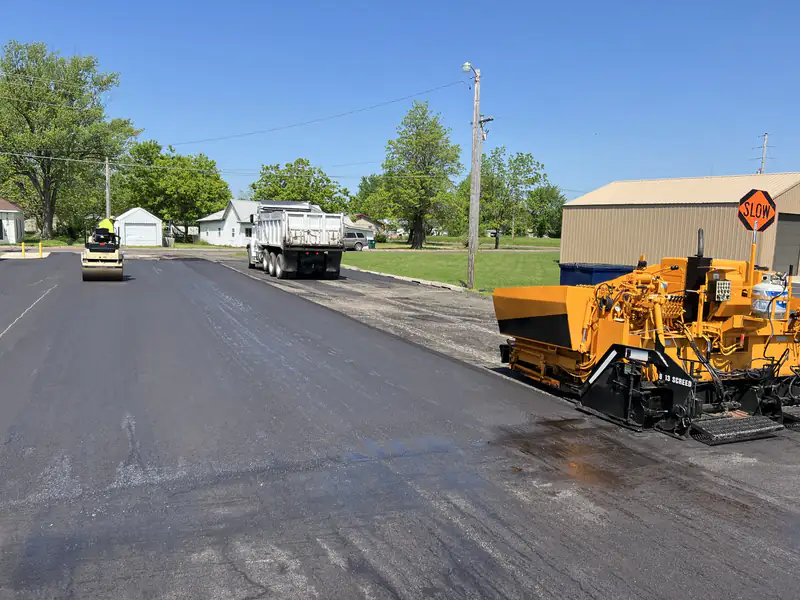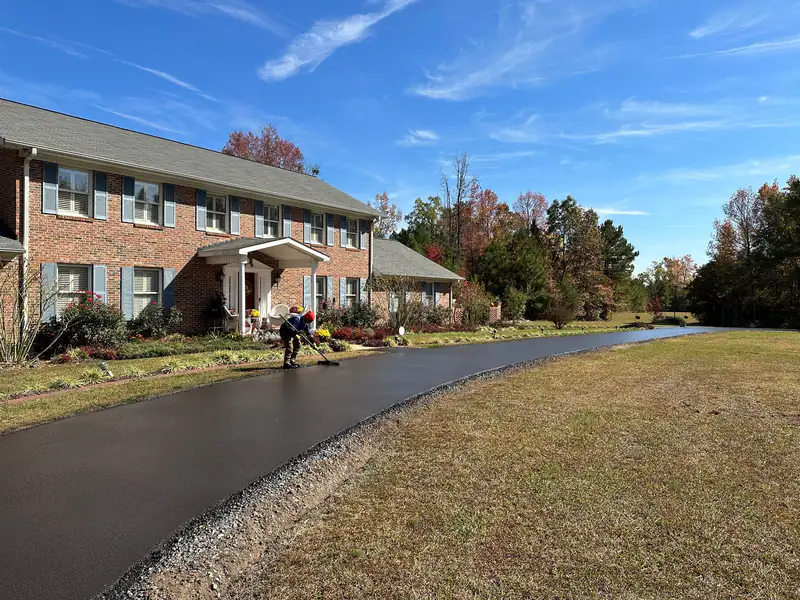
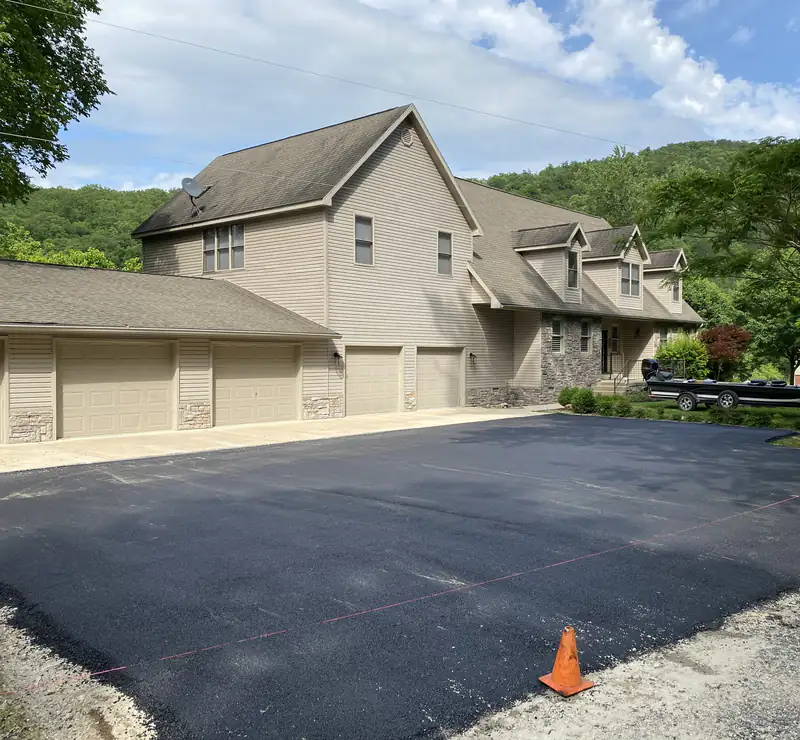
What St. Louis weather does to a driveway
St. Louis winters are not brutal, but they are hard on pavement. According to the National Weather Service, a normal January here has an average high of 40.4°F and an average low of 23.8°F, and the month's normal mean temperature is 32.1°F, right at the freezing mark. Normal yearly snowfall is 16.6 inches, which is modest.
The real test is how often the temperature crosses 32°F. In 2025, the Weather Service's St. Louis climate report counted 85 days with a low at or below freezing, but only 25 days when the high stayed at or below freezing. That leaves about 60 days when the temperature dipped to freezing or below and then climbed back above it. Each swing can let water that has soaked into cracks and joints freeze, expand and push on the pavement around it.
Summer is the other half of the story. The normal July high is 89.6°F, and 2025 logged 49 days at 90°F or hotter. So a St. Louis driveway has to handle cracking in the cold and softening in the heat, with road salt and brine tracked in on tires all winter.
Cost drivers: what moves the price
Installed asphalt usually costs less up front than a concrete driveway of the same size. The gap moves with material markets, because asphalt binder is refined from crude oil and concrete depends on cement. On many jobs, though, the site moves the price as much as the material does. These are the items that swing a quote either way:
- Tear-out and haul-off of an old driveway, or grading an existing gravel drive
- Base work: digging out soft clay and adding compacted crushed stone
- Thickness: typically 2 to 3 inches of compacted asphalt for a home, versus the 4-inch minimum slab depth the Illinois Ready Mixed Concrete Association calls for with concrete
- Size, shape and slope, plus how easily trucks can reach the site
- Drainage fixes such as regrading, culverts or a re-sloped apron
- Your city's permit rules for the approach where the driveway meets the street
- For concrete, reinforcement and decorative finishes such as stamping or color
Freeze-thaw and road salt
Concrete's main winter risk is scaling, where the top layer flakes and peels. The National Ready Mixed Concrete Association (NRMCA) explains that concrete soaked with water and put through repeated freezing and thawing is prone to scaling, and that deicers make it worse by keeping the surface wetter and adding freeze-thaw cycles. Newly placed concrete is especially vulnerable. A properly air-entrained mix, careful finishing and good curing all reduce the risk.
That is why concrete groups tell owners to skip deicing chemicals the first winter and use clean sand for traction. After that, NRMCA says calcium chloride or sodium chloride (rock salt) in moderate amounts is acceptable, and it warns against ever using ammonium sulfate, ammonium nitrate or magnesium-based salts. It also suggests hosing off salt that cars drip onto the driveway when weather allows, since you cannot control the brine your tires bring home from Highway 40.
Asphalt does not scale the way concrete does. Its winter enemy is water in cracks, which freezes, expands and pries them wider until they become potholes. Road salt is a smaller worry. The Asphalt Institute says well-designed, well-built asphalt is not damaged by sodium or calcium chloride salts. A 2024 lab study from a university transportation center funded by the U.S. Department of Transportation did find that chloride deicer solutions combined with freeze-thaw cycles weakened the bond between asphalt binder and stone in test samples. For either material, the best habits are the same: shovel or plow first, salt lightly and keep cracks sealed.
Repairs: patches, overlays and slab replacement
Asphalt is easier to fix. Cracks can be filled, and the Wisconsin Asphalt Pavement Association recommends doing it in spring to keep water out of the layers below. Potholes and failed spots can be cut out and patched with hot mix. When the surface is worn but the base underneath is still sound, the Colorado Asphalt Pavement Association says an overlay of 1.5 to 2 inches is usually enough, with no full tear-out. Asphalt that is milled off can be recycled into new pavement, and the National Asphalt Pavement Association and the Federal Highway Administration survey producers every year on how much of it is reused.
Concrete repairs are harder to hide. Small cracks can be sealed, but a broken or heaved section usually has to be sawed out and replaced, often from joint to joint. Light to moderate scaling can be resurfaced if the concrete underneath is sound, but NRMCA notes that the repair material will not match the color of the original, and repairing slabs with severe, spreading scaling may not be practical.
Install and curing time
Asphalt gets you back on your driveway sooner. The Colorado Asphalt Pavement Association advises waiting a few days before opening new asphalt to traffic. For cars that is typically 2 to 3 days, and longer in hot weather. Fresh asphalt is softer than it will be once it ages, so avoid turning your steering wheel while parked, which can scuff the surface. Hold off on sealcoat, too: the Asphalt Institute says a well-built driveway should not need sealing for about 2 to 5 years.
Concrete needs more time before it carries a car. The Illinois Ready Mixed Concrete Association says not to drive on a new concrete driveway for at least 7 days. In warm months it calls for curing with a curing compound or wet coverings. From mid-September to mid-April, it recommends insulating covers that keep the curing concrete above 55°F for at least 7 days. NRMCA also urges caution about placing outdoor concrete in late fall, winter or early spring if it could freeze soon after placement while still saturated.
Maintenance: what each one needs
Asphalt asks for small, regular upkeep. Concrete asks for less, but it usually costs more to fix when something breaks. Typical care for each:
- Asphalt: fill cracks in spring as they show up, keep the edges backed with stone, gravel, topsoil or grass so they do not crumble, and sealcoat once the surface starts to look dry and gray. The Colorado Asphalt Pavement Association suggests resealing every 2 to 5 years after that.
- Asphalt sealer choice: the U.S. Geological Survey found coal-tar-based sealcoat typically has about 1,000 times more PAH compounds than asphalt-based sealcoat, and the Asphalt Institute does not recommend coal-tar sealers. Ask for an asphalt-emulsion product.
- Concrete: apply a breathable silane or siloxane sealer (NRMCA says late summer after a few dry days is ideal), reseal about every 2 years as the Illinois Ready Mixed Concrete Association advises, keep joints sealed and skip deicers the first winter.
How long each one lasts, and how they look
InterNACHI's life-expectancy chart lists asphalt driveways at 15 to 20 years, and the Wisconsin Asphalt Pavement Association says a properly designed asphalt driveway can give up to 20 years of largely trouble-free service. The Illinois Ready Mixed Concrete Association says concrete driveways often last more than 30 years. All of those figures depend on the base, drainage, weather and care. Water that drains under a concrete slab can cause settlement cracks, and a sound asphalt driveway can be overlaid to add years instead of starting over.
Looks come down to taste. Asphalt is a smooth, seamless black that fades toward gray with sun and age, and a sealcoat brings the dark color back. It hides stains better than concrete, but oil and fuel drips can still soften it, so clean them up. Concrete starts out light gray and can be stamped, colored or finished with exposed stone, but it shows oil and rust stains, and it has control joints at regular spacing. The lighter surface also stays cooler in July, while dark asphalt warms up in winter sun, which can help a thin snow melt off sooner.
When asphalt is the better fit
Concrete makes sense if you want a decorative finish, a lighter surface, or the longest possible life with little routine upkeep, and you are willing to pay more up front and wait a week to use it. Some neighborhoods or HOAs also expect a certain material, so check first. For many St. Louis homes, though, asphalt is the better fit when:
- You want a lower up-front cost, especially on a long drive, a rural lane or a gravel conversion where square footage adds up fast
- You need the driveway back in days, not a week or more
- Your cars bring home a lot of road salt and brine every winter
- You would rather make small, low-cost repairs than replace whole slabs
- You want the option to resurface later instead of tearing out
Questions
Is asphalt or concrete better for St. Louis winters?
Both can hold up if they are built on a solid, well-drained base. Concrete's main risk here is surface scaling from freeze-thaw cycles and deicing salt, especially in its first winter. Asphalt does not scale, and it flexes a little with temperature changes, but water that gets into its cracks freezes and widens them. Given frequent freeze-thaw swings and salted roads, asphalt is often the easier one to live with, as long as cracks are filled each spring.
Can I use rock salt on a new driveway?
On new concrete, no. Concrete industry groups, including NRMCA and the Illinois Ready Mixed Concrete Association, say to skip deicers the first winter and use sand for traction. After that, NRMCA considers calcium chloride or sodium chloride in moderate amounts acceptable, and says deicers made with ammonium sulfate, ammonium nitrate or magnesium should never be used. On asphalt, the Asphalt Institute says sodium and calcium chloride do not damage well-built pavement, though lab research has found that chloride deicers plus freeze-thaw cycles can weaken the bond that holds asphalt together. Shovel first and salt lightly.
Can asphalt be paved over an old concrete driveway?
Sometimes. If the concrete is stable, with no heaving, sinking or loose pieces, it can serve as a base for new asphalt. The catch is that joints and cracks in the concrete tend to show back up through the asphalt over time. If the slab is broken or moving, tearing it out and building a proper stone base is usually the better long-term choice. An on-site look will tell you which you have.
Sources
- National Weather Service St. Louis: St. Louis January weather calendar (normals)
- National Weather Service St. Louis: St. Louis July weather calendar (normals)
- National Weather Service St. Louis: Climate summary for the year 2025 (issued January 1, 2026; archived copy, Iowa Environmental Mesonet)
- National Ready Mixed Concrete Association: CIP 2, Scaling Concrete Surfaces
- Illinois Ready Mixed Concrete Association: Driveways (homeowner guidance)
- Wisconsin Asphalt Pavement Association: Driveway Owners Guide
- Colorado Asphalt Pavement Association (via Asphalt Institute): Best Practices for the Use of Asphalt Driveways
- Asphalt Institute: Engineering FAQs, Asphalt Maintenance and Rehabilitation
- Mountain-Plains Consortium (U.S. DOT University Transportation Center), MPC 24-549: Effect of Deicing Agents and Environmental Conditions on the Performance of Asphalt Pavements in Cold Regions (2024)
- U.S. Geological Survey: Coal-Tar-Based Pavement Sealcoat, PAHs, and Environmental Health
- National Asphalt Pavement Association: Recycling and Sustainability (annual RAP survey with FHWA)
- InterNACHI: Standard Estimated Life Expectancy Chart for Homes