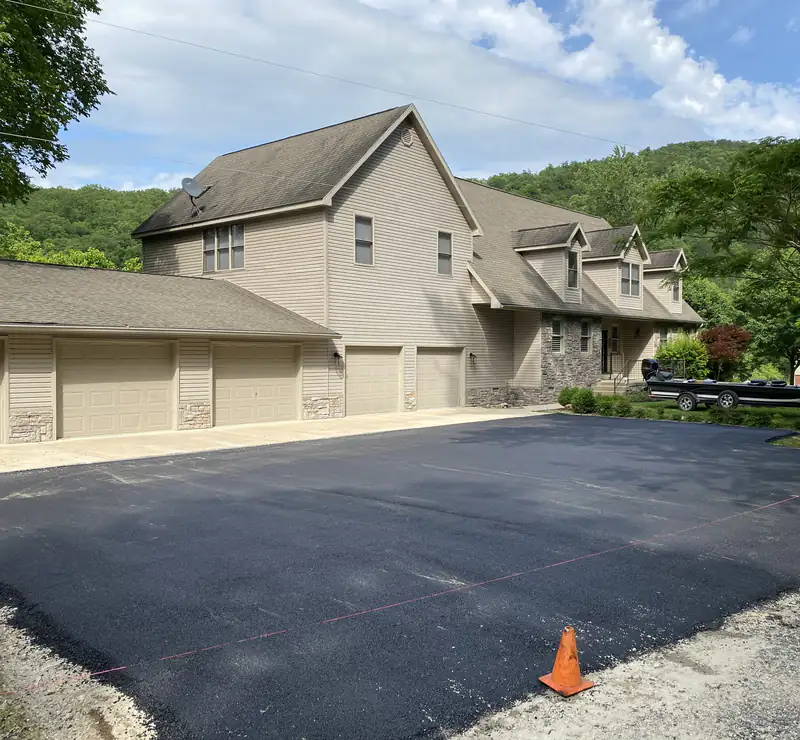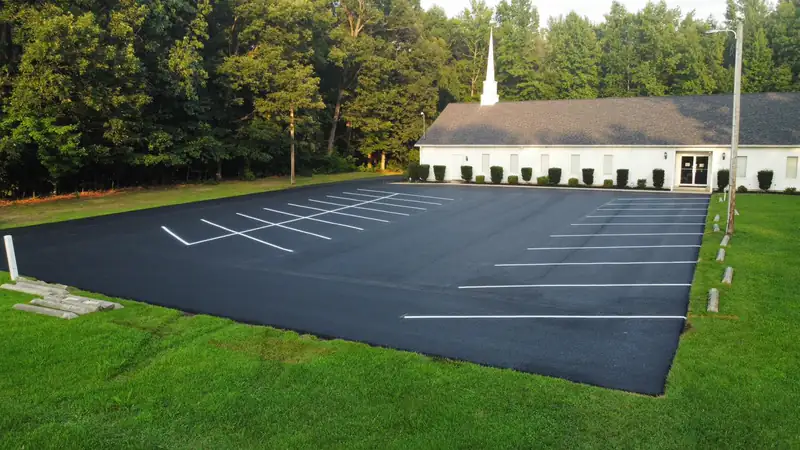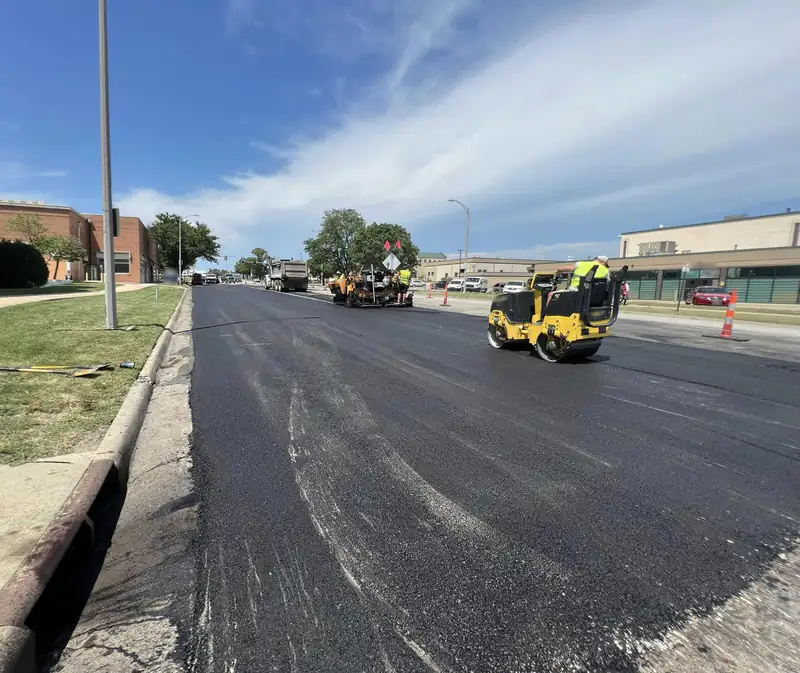
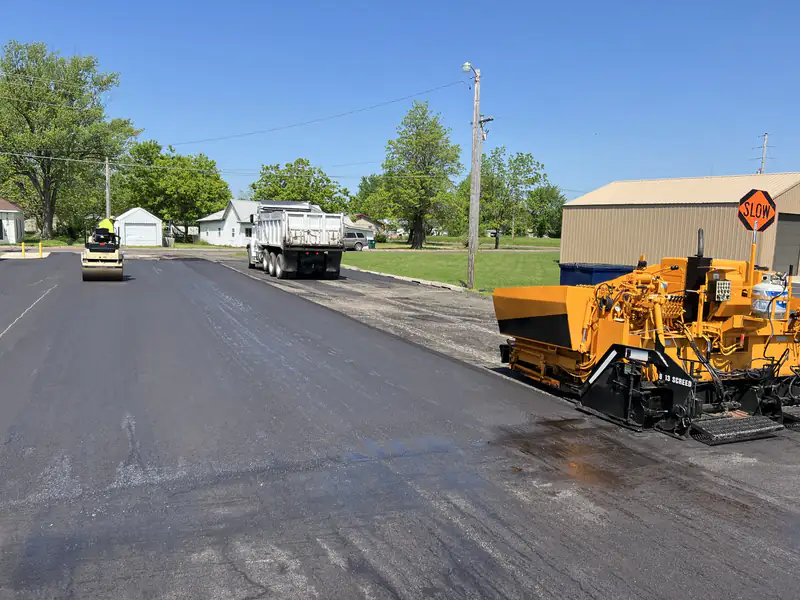
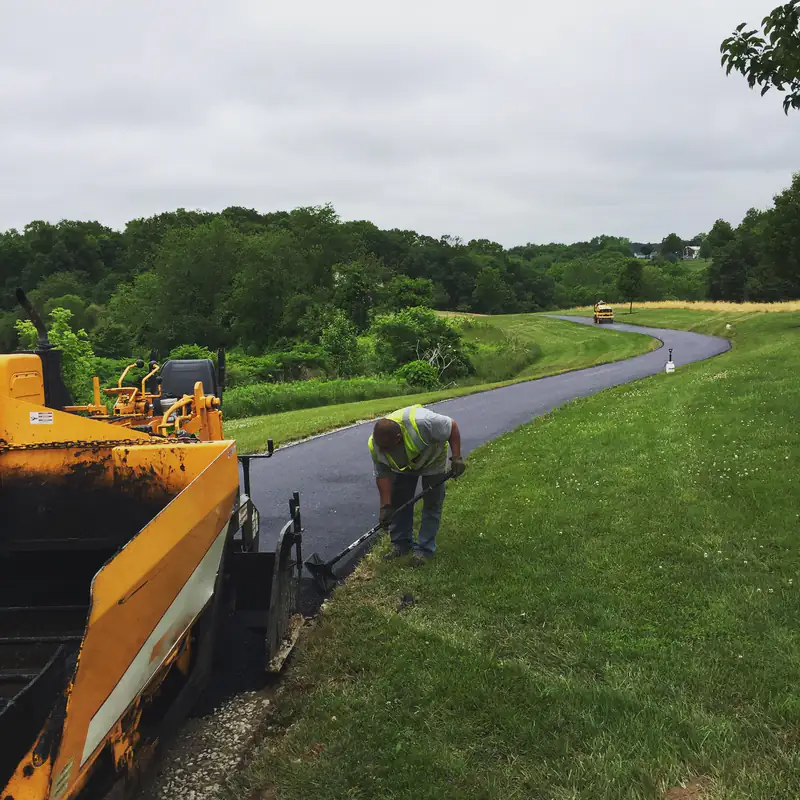
Good asphalt paving is more than a fresh black surface. It is a firm base, the right thickness of hot mix rolled tight while it is hot, and a slope that moves water off before winter can get into it. Chesterfield Asphalt Paving paves driveways, parking lots, private roads and farm lanes across St. Louis and the Metro East. Call (866) 490-7680 or send the form for a free on-site estimate and 25% off.
Asphalt paving for homes, businesses and farms
Hot-mix asphalt is the black pavement you see on driveways, parking lots and roads. It is a blend of crushed stone, sand and liquid asphalt binder, mixed hot at a plant, hauled to the job and rolled tight while it is still hot. Done right, it gives you a smooth, quiet surface you can drive on within days, and it is easy to patch or resurface later.
We pave for homeowners, business owners, property managers, churches, HOAs and farms on both sides of the river, from the City of St. Louis and St. Louis County out through St. Charles, Jefferson and Franklin counties and across to Madison and St. Clair counties in Illinois, plus the counties around them. Driveways and parking lots are our main focus, and each has its own page with more detail. This page covers asphalt paving in general: the kinds of jobs, what makes pavement last and what to expect from an asphalt paving contractor.
- Driveways: new asphalt driveways, gravel-to-asphalt conversions, replacements and widening
- Parking lots: new lots, resurfacing, repairs and additions for shops, offices, churches and apartments
- Roads: private roads, subdivision streets, farm lanes and access roads
- Patching and repairs: potholes, failed sections and cut-in patches
New paving, replacement, overlays and repairs
Not every worn-out surface needs to be torn out. The right fix depends on what is going on under the asphalt, not just on top of it. At the free estimate we look at the cracking, the drainage and the condition of the base, then explain which of these fits your pavement.
An overlay costs less up front, but it cannot fix a failing base. Cracks in old pavement tend to show back through a new layer (the industry calls this reflective cracking). New asphalt laid over widespread spiderweb cracking, soft spots or heaving often cracks in the same pattern, sometimes within a few seasons. That is why the estimate starts with what is underneath.
- New installation: for bare ground or gravel. The site is graded, a base of crushed rock is placed and compacted, and hot mix goes down on top.
- Full-depth replacement: for asphalt that has failed down to the base. The old pavement comes out, soft spots are dug out and rebuilt, and new asphalt goes in.
- Overlay or resurfacing: for pavement with a solid base and worn surface. The old surface is cleaned, patched and sprayed with a tack coat so the layers bond, then a new layer, typically 1.5 to 2 inches, goes on top. Sometimes the old surface is milled first so heights still work at garage floors, doors and curbs.
- Patching and repairs: for isolated potholes and failed spots. The bad area is cut out square, dug to firm material and filled with compacted hot mix.
What makes asphalt last: base, thickness and drainage
The worst asphalt failures usually start below the surface. The asphalt layer spreads out the weight of a car or truck, but the base rock and the soil under it carry the load. If the base is thin, soft or wet, the surface tends to crack and sink even when the hot mix is good.
That matters here. Much of the ground around St. Louis is silty soil with a clayey layer below the topsoil. Clay holds water, swells when it is wet, shrinks when it dries and loses strength when it stays soaked. Paving over it well means digging out soft spots, building a base of compacted crushed rock and shaping the grade so water runs away instead of soaking in along the edges.
- Subgrade: the native soil is checked for soft spots, and any that turn up are dug out and replaced with firm material.
- Base: typically 4 to 8 inches of compacted base rock for homes, often more on soft clay or where trucks will drive.
- Asphalt thickness: typically 2 to 3 inches compacted for driveways, and more for parking lots and roads that carry trucks.
- Compaction: hot mix has to be rolled while it is still hot. Asphalt that cools before it is compacted stays porous, lets water in and wears out early.
- Drainage: a slope of typically at least 1 to 2 percent (about 1/8 to 1/4 inch per foot) so water sheets off the surface and away from the edges.
- Edges: a firm, backfilled shoulder or a tapered edge helps keep the sides from cracking and breaking off.
Built for St. Louis weather
St. Louis weather is hard on pavement from both ends of the thermometer. Winter brings repeated freeze-thaw cycles. Water gets into cracks and the base, freezes, expands and pushes the asphalt apart. The thaw leaves the base soft, and traffic breaks the weakened surface. That is how a lot of potholes form.
Summers are hot and humid, and dark asphalt gets much hotter than the air. Soft pavement can scuff under turning tires and rut under heavy loads, especially while it is new. Asphalt binders are graded for the high and low pavement temperatures they have to handle. The right mix, rolled tight over a strong base, helps resist both winter cracking and summer rutting.
Paving season here runs roughly spring through fall. Hot mix has to stay hot from the plant to the roller, and many asphalt plants cut back or shut down in the coldest months. Paving is typically done when air and ground temperatures are at least 40 to 50°F and rising. Thinner layers need the warmer end of that range because they cool faster. Late fall and winter are a good time to get your free estimate and plan the work for spring.
Asphalt or concrete?
Both can work. Asphalt has a few practical advantages that make it a common choice for driveways and parking lots.
Concrete needs less routine upkeep and does not soften in summer heat. Asphalt needs crack filling and an occasional sealcoat to reach its full life. If you are weighing the two, bring it up at your free estimate and we will walk through the trade-offs for your property.
- Lower upfront cost: asphalt usually costs less to install than concrete for the same area.
- Faster to use: you can typically drive on new asphalt in 2 to 3 days. Concrete usually needs about a week before regular car traffic.
- Handles winter well: asphalt flexes a little through freeze-thaw and is generally less affected by deicing salt, which can scale and pit concrete.
- Easy to fix: damaged sections can be cut out and patched, and an overlay can renew the whole surface without tearing everything out.
Caring for new asphalt
New asphalt stays a little soft while it cures. The first weeks and months are when it is easiest to mark or dent, so a little care early goes a long way.
With a solid base and basic upkeep, an asphalt driveway or lot typically lasts 15 to 20 years or more, and a well-timed overlay can add years beyond that.
- Keep cars off it, typically for 2 to 3 days, and longer in hot weather.
- For the first few weeks, avoid turning the steering wheel while the car is parked, and set kickstands, trailer jacks and ramps on a board.
- Keep heavy trucks, like dumpster or delivery trucks, off new residential asphalt and away from the edges when you can.
- Hold off on sealcoat until the asphalt has cured, typically 6 to 12 months, then reseal every few years.
- Fill cracks as they appear so water cannot reach the base.