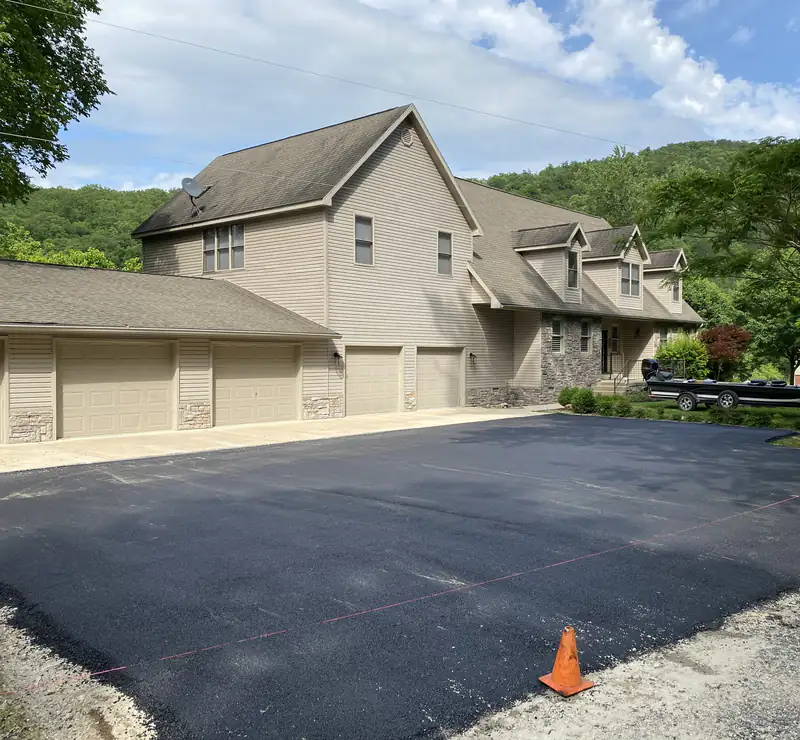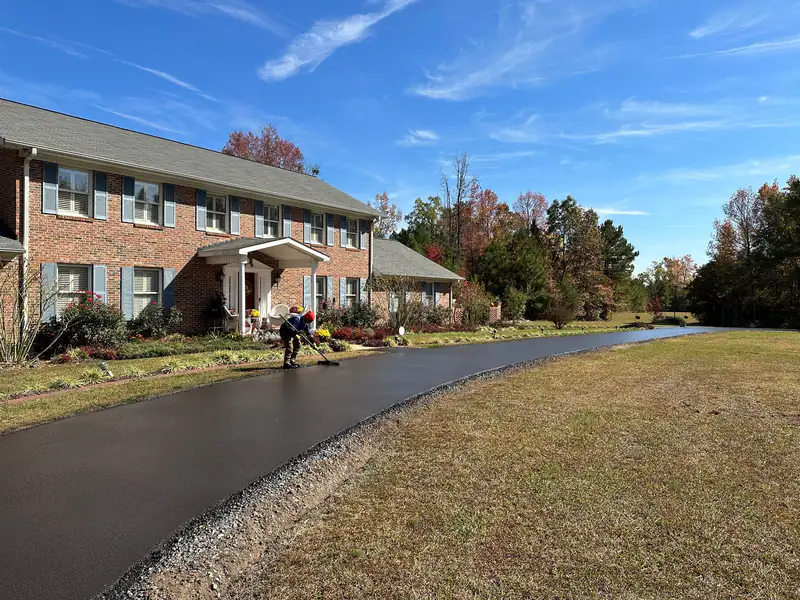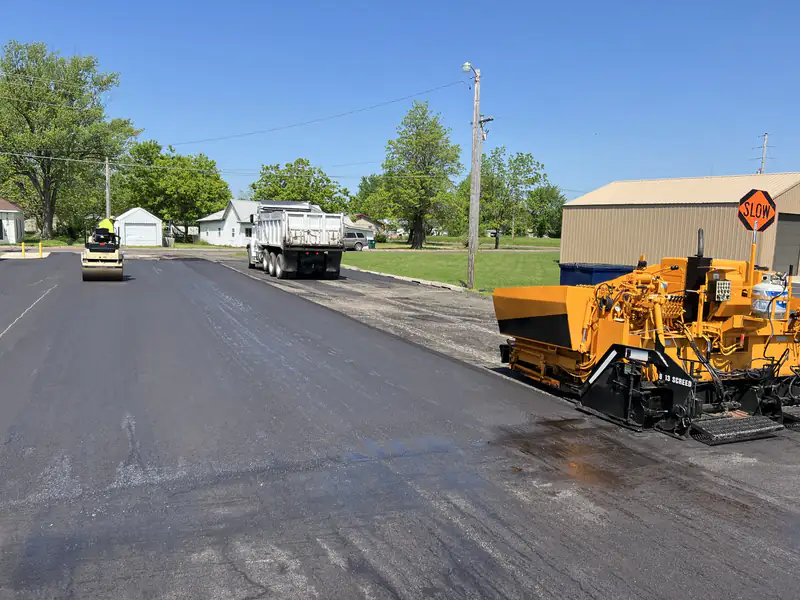
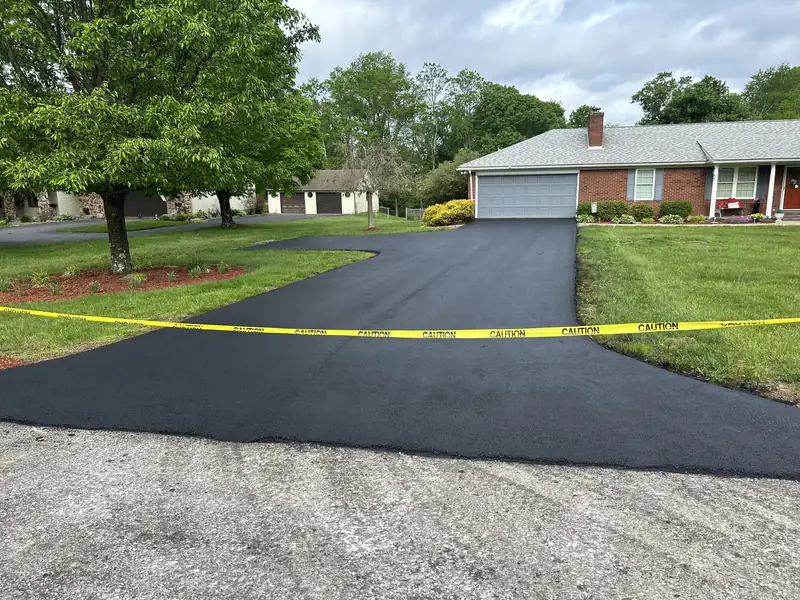
When you can walk, drive and park on it
Hot-mix asphalt is spread and rolled while it is still hot. Once it cools, it is firm enough to walk on. But it keeps stiffening over time, and it softens again whenever the sun bakes it. That is why the first year needs more care than year five.
Your installer's instructions come first, because the mix, the thickness and the weather all change the answer. As a general guide:
- Foot traffic: usually fine once the surface has cooled, often the same day. Keep bikes, scooters and kickstands off for the first few days.
- Cars and pickups: typically after about 3 days. A Colorado Asphalt Pavement Association brief, posted by the Asphalt Institute, advises waiting a few days. In a hot spell, give it 5 to 7 days.
- Daily parking: fine after that, but move your exact spot around during the first summer so the same four tire spots do not press in.
- Heavy trucks: keep them off as long as you can. The same brief says new homeowners should not let a heavy moving truck onto a fresh driveway.
Summer heat, scuffs and heavy spots
Asphalt softens as it warms, and St. Louis summers are hot. NOAA's 1991 to 2020 climate normals for St. Louis Lambert International Airport put the average July high near 90°F, with about 47 days a year at 90°F or hotter. Dark pavement in full sun runs much hotter than the air. In an Arizona pilot study cited by the EPA, conventional asphalt reached surface temperatures up to 152°F at midday. St. Louis is milder than Arizona, but the same effect shows up here on a July afternoon.
On those afternoons a new driveway can take a mark from anything that presses hard on a small spot. The most common mark is a scuff. The Wisconsin Asphalt Pavement Association notes that turning the steering wheel while the car is standing still can scuff the surface, especially with front-wheel drive and low-profile tires. The same guide says most of these marks fade with time.
- Turn the wheel only while the car is rolling, even slowly.
- Pull in and back out at a crawl. Skip quick starts and hard stops.
- Avoid tight turnarounds on the pavement during the first summer.
- Set a square of plywood under motorcycle and bike kickstands, trailer tongue jacks, camper jacks, car jacks and ladder feet.
- Watch narrow legs and bases: patio chairs, grills and portable basketball hoops.
- A typical home driveway is built for cars and pickups. If you rent a roll-off dumpster, have it set in the street where your town allows it, or lay plywood under its rails.
Edges, drainage and spills
The edges are usually the weakest part of an asphalt driveway. With nothing beside them, a tire can crush an edge and break off chunks. The Wisconsin guide advises keeping vehicles away from unsupported edges and building support with stone, gravel, topsoil or grass.
In practice, backfill both sides with topsoil soon after paving, bring it up level with the asphalt, and seed it. Until the grass takes hold, keep tires a foot or so inside the edge.
Water is the other enemy. The Wisconsin guide stresses that water must drain off the driveway and away from your home. After the first hard rain, look for puddles that sit for hours and for downspouts that dump onto or under the edge, and redirect them. Water that soaks the base rock under the asphalt weakens it, and in winter it freezes.
Finally, clean up drips fast. Gas, oil, antifreeze and power-steering or transmission fluid can break down the asphalt binder, according to the Wisconsin guide. Soap and water, absorbent powder or kitty litter all work.
Sealcoating: why year one is usually too early
This one surprises people. The Asphalt Institute's engineering FAQ says a newly paved driveway should not be sealed right away. A well-built driveway or parking lot, it says, should not need sealing for about 2 to 5 years, depending on the climate and the quality of the original work.
The Colorado brief says to wait until the driveway is at least several months old, then seal every 2 to 5 years if you choose to. Sealer brings back the deep black look and, per the Wisconsin guide, helps protect the surface from vehicle fluids and aging. It does not add strength.
If you want that look, a sensible plan in St. Louis is to let the driveway get through one full summer first. Then seal in warm, dry weather and follow the product's temperature and dry-time rules. More is not better. The Asphalt Institute calls for a thin, even coat and warns that too much can track onto shoes and tires. Sealing too often also builds a thick film that can crack and peel.
Cracks: what is normal and when to seal them
A well-built new driveway rarely cracks in its first year. A Federal Highway Administration crack-sealing manual notes that cold-weather (thermal) cracks in asphalt pavement typically show up 2 to 7 years after construction. A crack in year one, especially near an edge or with a dip beside it, often points to the base, drainage or edge support. Take photos and call the contractor who paved it.
St. Louis winters are hard on cracks. NOAA normals show about 85 nights a year at or below freezing at Lambert, and a normal January day runs from about 24°F to about 40°F. Water that gets into a crack freezes, expands and pries it wider, over and over.
So seal cracks early. The FHWA crack-sealing manual says the ideal time is when it is moderately cool, about 45 to 65°F, which usually means spring or fall. In St. Louis that is often a mild April or October day. The manual treats cracks about 5 to 19 millimeters wide (roughly 3/16 to 3/4 inch) as good candidates for sealing. Narrower hairline cracks can usually just be watched.
Winter: plows, shovels and salt
NOAA's normal snowfall at Lambert is 16.6 inches a year, but it swings widely. National Weather Service records show about 3 inches in 2023 and about 25 inches in 2025. Its freeze records put the average first freeze in St. Louis around October 31 and the last around April 5. A new driveway usually comes through winter fine if you keep steel blades off the surface and protect the edges.
Salt should not hurt a well-built driveway. The Asphalt Institute says research shows sodium and calcium chloride deicers do not damage well-designed, well-constructed asphalt pavement. Still, go light for the sake of your lawn, plants and local streams. The Minnesota Pollution Control Agency's rule of thumb: shovel first, and about a 12-ounce mug of salt covers a 20-foot driveway. Most salt stops working at about 15°F or colder, and leftover salt on dry pavement should be swept up.
- Before November, push reflective stakes along both edges so you and any plow driver can see where the pavement ends.
- If a service plows your drive, ask them to keep the blade slightly raised or on shoes and to stay off the edges. A rubber or poly cutting edge is gentler than bare steel.
- Use a plastic shovel or one with a plastic edge. Do not chip ice with a steel chopper.
- Pile snow where the meltwater drains away from the pavement, not along the edges.
Your year-one checklist
Tape this inside the garage door.
- Paving day to day 3: foot traffic only once it cools. Cars stay out, longer in a heat wave.
- First two weeks: slow in, slow out, and turn the wheel only while rolling. No heavy trucks.
- First month: backfill and seed the edges. Check for puddles and downspout runoff after a hard rain.
- First summer: move your parking spot around, put plywood under jacks and kickstands, and clean up fluid drips fast.
- Before the first snow: stake the edges, talk to your plow service, and get a plastic shovel and a small bag of salt.
- About 12 months in: walk the whole driveway. Note cracks, soft spots and puddles. Seal cracks on a mild spring or fall day, and plan any sealcoat for year two or later.
When to call a paving contractor
A few things are not normal wear: a spot that sinks or ruts under your car, an edge that keeps breaking off, puddles that never drain, or cracks in the first few months. Those usually trace back to the base or the drainage, and they get worse with each freeze. Call the contractor who did the work while the problem is small.
If you are still planning a driveway, or your old one is past saving, call Chesterfield Asphalt Paving at (866) 490-7680 or request a free estimate.
Questions
How long should I wait to drive on a new asphalt driveway?
Typically about 3 days for cars and pickups, or 5 to 7 days in hot weather. You can usually walk on it once it cools. Keep heavy trucks off as long as you can.
Should I sealcoat my new driveway in the first year?
Usually not. The Asphalt Institute says a well-built driveway should not need sealing for about 2 to 5 years. If you want the black look sooner, let it get through one full summer first, then seal in warm, dry weather.
Will road salt damage my new asphalt driveway?
Not if the driveway is well built. The Asphalt Institute says research shows common sodium and calcium chloride deicers do not damage well-designed, well-built asphalt. Use a light hand anyway to protect your lawn and plants.
Sources
- Asphalt Institute: Engineering FAQs (sealing new pavement, de-icing salts, sealer application)
- Colorado Asphalt Pavement Association (via Asphalt Institute): Best Practices for the Use of Asphalt Driveways
- Wisconsin Asphalt Pavement Association: Driveway Owners Guide
- Federal Highway Administration: Materials and Procedures for Sealing and Filling Cracks in Asphalt-Surfaced Pavements (FHWA-RD-99-147)
- NOAA NCEI: U.S. Climate Normals 1991 to 2020 (St. Louis Lambert International Airport, USW00013994)
- National Weather Service St. Louis: Freeze Dates for St. Louis, MO
- National Weather Service St. Louis: Annual Snowfall, 1885 to Present
- Minnesota Pollution Control Agency: Too Much Salt This Winter
- U.S. EPA: Using Cool Pavements to Reduce Heat Islands